Guides
Cosigner vs a bigger down payment
If you have thin or no US credit history, a cosigner or a bigger down payment can both help. They work in different ways, and neither one guarantees approval, a low APR, or a certain monthly payment.

How each option helps
A bigger down payment lowers the amount you need to finance. That can reduce the lender's risk and may help your application look stronger. It can also lower your monthly payment and reduce total interest if the APR and term stay the same.
A cosigner helps in a different way. The lender looks at the cosigner's credit profile and income along with yours. If the cosigner is accepted by the lender, that may help you qualify when your own US credit file is thin, short, or missing.
Neither option is magic. Approval, APR, and payment depend on the borrower, the lender, the car, the loan term, and the down payment. Rules and lender programs also vary by state.
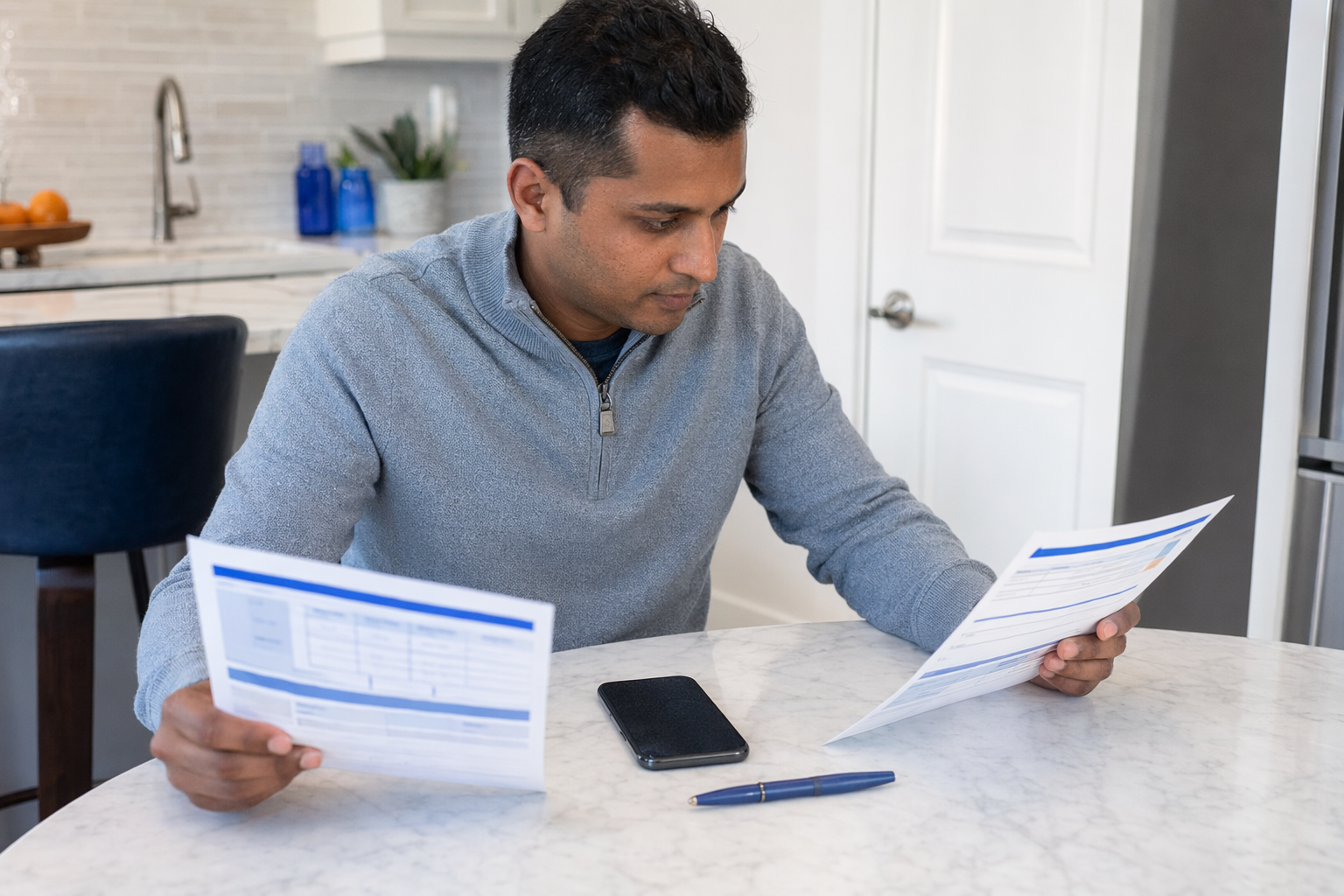
When a bigger down payment may be the better move
A larger down payment may make sense if you want to borrow less and keep the deal simpler. It can be useful when your income is steady, the car price is reasonable, and you mainly need to lower the lender's risk enough to fit a program.
It may also help you avoid being upside down on the loan, where you owe more than the car is worth. That matters because cars lose value, especially in the first years. Putting more money down can give you a safer starting point.
But do not empty your savings just to get a car. You may still need money for insurance, registration, repairs, fuel, and emergencies. A car payment that looks manageable can still become hard if you have no cash buffer.
Use the calculator to compare rough loan amounts, payments, and total cost. Focus on APR and total paid over time, not only the monthly payment.
When a cosigner may make more sense
A cosigner may help when the main problem is not the size of the down payment, but the strength of your credit profile. This can happen for new arrivals, immigrants, younger borrowers, or anyone with little US credit history even if they have income and some cash saved.
A lender may view a qualified cosigner as extra support for the application. In some cases, that can open more lender programs or better terms than a small increase in down payment would. But that depends on the lender's rules. Nobody can promise that adding a cosigner will get you approved or lower your APR.
A cosigner should understand the risk very clearly. If you miss payments, the cosigner may also be responsible under the contract. That can affect relationships as well as the cosigner's finances.
If you are not sure which path is realistic, we help you get matched with licensed auto-financing brokers and lender programs that work with different situations. DriveLine Credit is a free matching service. We are not a lender or finance broker, and we never pull credit or ask for an SSN or ITIN.
What lenders usually look at beyond these two options
Cosigner or down payment is only part of the picture. Lenders often look at income, job stability, housing payment, debt levels, the vehicle itself, the loan term, and whether the deal fits their program. A less expensive car can sometimes improve the application more than either a cosigner or a slightly bigger down payment.
That is why it helps to look at the full deal. A lower monthly payment is not always a better deal if it comes from a very long term, a high APR, or expensive add-ons. Read the contract carefully and confirm the APR, finance charge, and total of payments in writing before signing.
Be careful with common dealer-finance traps. These can include yo-yo or spot-delivery financing, payment-packing, marked-up dealer APR, and surprise add-ons in the paperwork.
Questions to ask before you decide
If you are comparing these two options, ask what problem you are really trying to solve. Are you trying to get approved at all, reduce the amount financed, lower the monthly payment, or improve the total cost? The right answer can be different for each goal.
Also ask how much cash you can safely put down without leaving yourself exposed. And if you are considering a cosigner, make sure both of you understand the contract, the payment responsibility, and what happens if the loan becomes hard to manage.
For general education, our guides and financing pages can help you understand the terms you may see. If you want to explore your options, we only collect contact and situation details to help you get matched. We never ask for an SSN, ITIN, driver's-license number, bank account number, or credit report.
A cosigner can help with thin credit, and a bigger down payment can help by lowering the loan amount, but the better choice depends on the full deal.
Common questions
Is a cosigner better than putting more money down?
Not always. A cosigner may help more if your main issue is thin or no US credit history, while a bigger down payment may help more if reducing the loan amount is the main issue. Some borrowers use both, but neither guarantees approval or a better APR.
Will a bigger down payment always lower my APR?
Not always. A larger down payment can reduce lender risk, but APR still depends on the lender, your application, the vehicle, the term, and other factors. It may lower your payment and total interest by reducing the amount financed, even if the APR does not change much.
Does a cosigner guarantee I will get approved?
No. A cosigner can strengthen an application, but lenders still have their own rules. Approval, APR, and payment are never guaranteed.
Should I use all my savings as a down payment?
Usually it is wise to keep some emergency cash if you can. Cars come with other costs like insurance, registration, maintenance, and unexpected repairs. This is general information, not personal financial advice.
What does DriveLine Credit do?
We are a free matching service. We help you get matched with licensed auto-financing brokers and lender programs. We do not make loans, set APRs, approve financing, sell cars, pull credit, or ask for an SSN or ITIN.
How do I protect myself before signing?
Verify that the broker or lender is licensed in your state, read the full contract, and confirm the APR and total cost in writing. Watch for yo-yo financing, payment-packing, marked-up dealer APR, and surprise add-ons.