Guides
Financing a new vs used car
New and used cars can lead to very different financing terms. A lower monthly payment can still cost more over time if the APR is higher or the loan is longer.
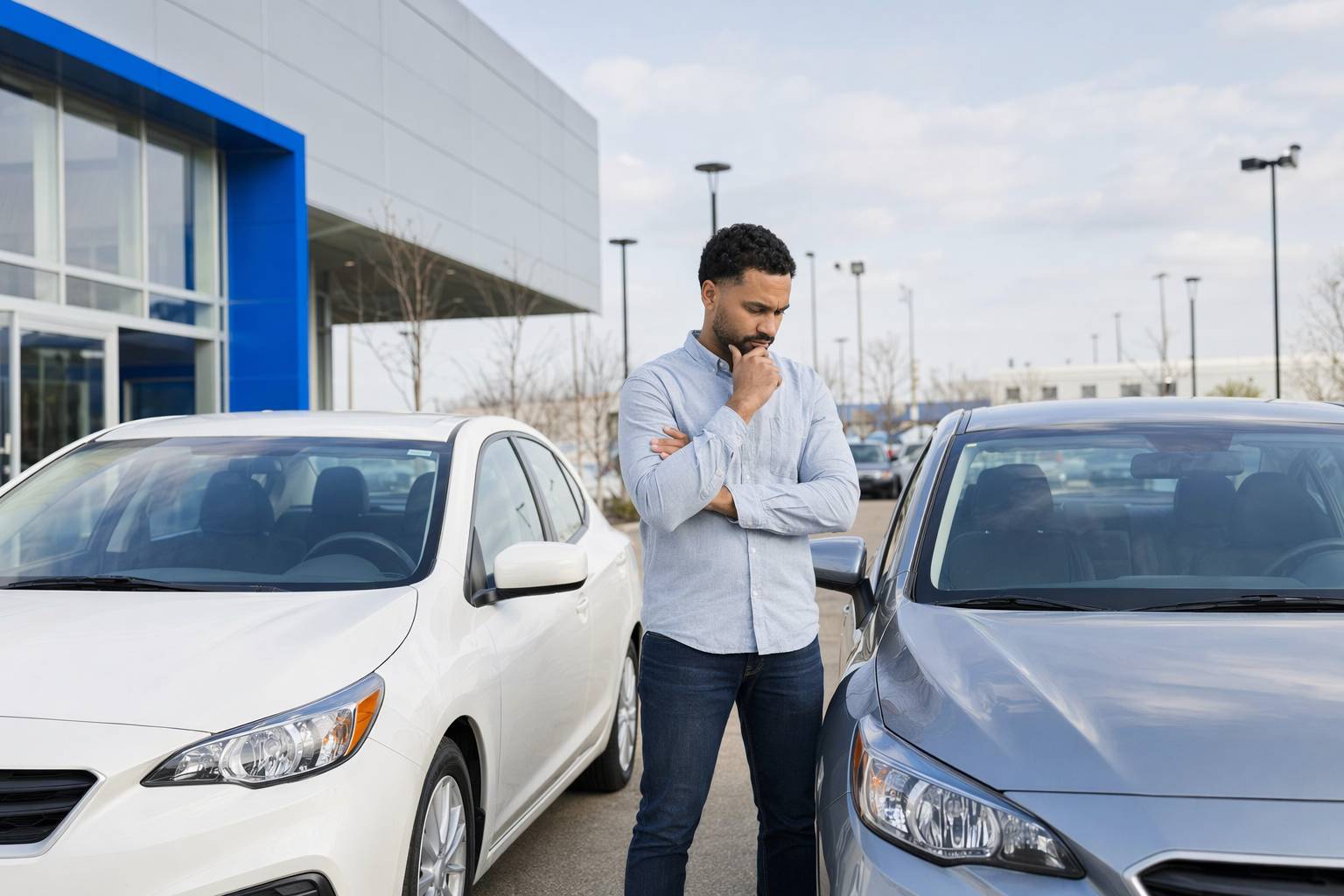
What changes when you choose new or used
The car you choose affects more than the sticker price. Lenders often see new cars as lower risk, so the APR may be lower than on a used car. Used cars usually cost less upfront, but the loan can come with a higher APR, a shorter term, or both.
That means the cheapest car to buy is not always the cheapest car to finance. A used car with a lower price can still end up costing more in total if the rate is higher or the loan runs longer. When you compare offers, look at the APR, the loan term, the down payment, and the total amount you will pay over time.
For new arrivals and people with thin or no US credit history, the difference can matter even more. Lenders may use the car’s age, mileage, and resale value as part of the decision. If you are trying to understand your options, we help you get matched with licensed auto-financing brokers and lender programs that work with a range of situations.

Why used cars often have higher APRs
Used cars usually carry more risk for a lender than new cars. They have already lost some value, and they may need repairs sooner. Because of that, the APR on a used-car loan is often higher than the APR on a new-car loan.
There are other reasons too. The car’s age, mileage, and condition can all affect the financing terms. A very old or high-mileage car may be harder to finance at all, or it may only qualify for a shorter loan term. Shorter terms can mean higher monthly payments, even if the amount borrowed is smaller.
This is why it helps to compare the full cost, not just the payment. A payment that looks easier each month may still cost more overall if the APR is marked up or the term is stretched too far.
Why new cars can still be a problem
New cars are not always the better financial choice. The purchase price is usually higher, and a larger loan can mean more interest paid over time. Insurance can also be higher on a new car, which affects your monthly budget even though it is not part of the loan itself.
A new-car deal can also become expensive if the term is very long. A long term may lower the monthly payment, but it can raise the total cost. If you plan to leave the country, change jobs, or move soon, a longer loan may not fit your plans.
The right choice depends on your budget, your driving needs, and how long you expect to keep the car. If you are not sure what a payment really means, use the calculator to compare APR, term, and total cost side by side.
What newcomers should watch for in the deal
If you are buying from a dealership, read every financing term before you sign. Watch for yo-yo or spot-delivery financing, where you are told you can take the car home before the final loan is approved. Also watch for payment-packing, where extras are added to the deal and the payment gets bigger without a clear reason.
Be careful with marked-up dealer APRs and surprise add-ons. Ask for the APR and total cost in writing, and ask what is optional and what is required. If the numbers change, do not feel rushed. You can slow down and compare other options.
DriveLine Credit does not make loans, set APRs, or pull credit. We do not ask for a Social Security number or ITIN. We only collect contact and situation details, then help you find licensed brokers and lender programs that may fit your needs.
How to compare your options
Start with the full picture: car price, down payment, APR, loan term, monthly payment, and total amount paid. A lower monthly payment is not always better if it comes from a much longer term or a higher APR.
Think about how the car fits your life too. A used car may be a good choice if you want a lower upfront cost and are comfortable with possible repair expenses. A new car may make sense if you want a longer warranty and can handle a higher price. Either way, the financing should fit your budget without stretching it too far.
If you want help understanding where you may fit, get matched with licensed auto-financing brokers and lender programs. We can help you find options for people with thin or no US credit history, but approval, APR, and payment always depend on the borrower, the car, the term, the down payment, and the lender.

New cars may have lower APRs, but used cars may cost less upfront; the best choice depends on total cost, not just the monthly payment.
Common questions
Is it easier to finance a new car or a used car?
New cars are often easier to finance and may have lower APRs, but the higher price can mean a larger loan. Used cars may be cheaper to buy, but the financing can be tighter and the APR can be higher.
Can a used car cost more overall than a new car?
Yes. A used car can end up costing more in total if the APR is higher, the term is longer, or the car needs repairs soon after purchase. Always compare total cost, not just the payment.
Do you check my credit or ask for my SSN or ITIN?
No. DriveLine Credit does not pull or access credit, and we do not ask for an SSN or ITIN. We only collect contact and situation details so we can help match you with licensed brokers and lender programs.
Can you guarantee approval or a certain APR?
No. No one can guarantee approval, APR, or monthly payment. Those depend on your profile, the car, the term, the down payment, and the lender or broker program.